
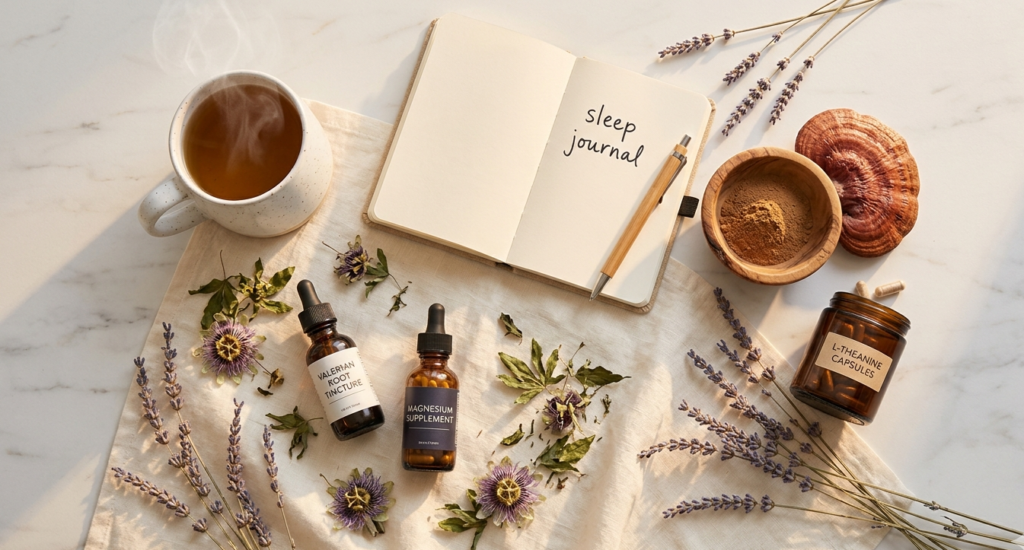
If you’re reading this at 2 AM after another night of tossing and turning, you’re not alone. About 1 in 3 adults struggle with insomnia, and the “sleep wellness” industry is booming in 2026.
Everyone’s talking about magnesium baths, herbal infusions, and evening rituals. But which natural sleep remedies actually work — and which are just expensive placebos?
Here are 5 science-backed natural sleep aids that can help you fall asleep faster and sleep more deeply. No prescription required.
1. Magnesium — The Relaxation Mineral
Best for: Trouble falling asleep, restless legs, muscle tension at night
Magnesium is trending hard in 2026 — and for good reason. This mineral is involved in over 300 biochemical reactions in your body, including the ones that help you relax and sleep.
How It Helps Sleep
Magnesium:
- Activates your parasympathetic nervous system (rest and digest mode)
- Regulates melatonin, your sleep hormone
- Binds to GABA receptors, calming your nervous system
- Relaxes muscles, reducing nighttime tension and restless legs
Low magnesium levels are strongly linked to insomnia and poor sleep quality. Many people are deficient and don’t know it.
The Research
Multiple studies show magnesium supplementation improves:
- Time to fall asleep
- Sleep quality and depth
- Early morning awakening
- Restless leg symptoms
One study in older adults showed 500mg magnesium significantly improved insomnia symptoms within 8 weeks.
How to Use It
Oral supplements:
- 200-400mg magnesium glycinate or citrate 1-2 hours before bed
- Glycinate is best for sleep (gentle, well-absorbed, non-laxative)
- Start low and increase gradually
Topical magnesium:
- Magnesium oil spray on legs/feet before bed
- Epsom salt baths (magnesium sulfate) — soak for 20 minutes
- Magnesium lotion
Pro tip: The trending “sleepy girl mocktail” on TikTok — magnesium powder + tart cherry juice + sparkling water — actually has science behind it. Both magnesium and tart cherry support sleep.
Side Effects
Oral magnesium can cause loose stools in high doses. Stick to 400mg or less, and use glycinate form to minimize digestive issues.
2. Valerian Root — Nature’s Sedative
Best for: Difficulty falling asleep, anxiety-driven insomnia, racing thoughts
Valerian root has been used as a sleep aid for over 2,000 years. It’s one of the most well-researched herbal sleep remedies — and it actually works for many people.
How It Helps Sleep
Valerian increases GABA (gamma-aminobutyric acid) in the brain — the same neurotransmitter that sleep medications target. More GABA = calmer nervous system = easier to fall asleep.
The Research
Clinical trials show valerian:
- Reduces time to fall asleep by an average of 15-20 minutes
- Improves subjective sleep quality
- Works best with consistent use (not as a one-time sleep aid)
It’s not as strong as prescription sleep meds, but it’s significantly more effective than placebo and doesn’t cause next-day grogginess for most people.
How to Use It
- Extract: 300-600mg standardized extract 30-60 minutes before bed
- Tea: 2-3g dried root steeped 10 minutes (warning: tastes very earthy)
- Capsules: Most convenient option
Take it consistently for at least 1-2 weeks — valerian builds effectiveness with regular use.
Side Effects
Generally safe. Some people experience mild headache or grogginess the next morning. Start with a lower dose (300mg) and increase if needed.
Don’t combine with: Alcohol, sedatives, or other sleep medications
Learn more about Valerian Root →
3. L-Theanine — The Calm Focus Amino Acid
Best for: Racing thoughts, anxiety before bed, trouble “turning off” your brain
L-theanine is an amino acid found naturally in green tea. It’s unique because it promotes relaxation without drowsiness — then helps you sleep when it’s actually time for bed.
How It Helps Sleep
L-theanine:
- Increases calming brain waves (alpha waves)
- Boosts GABA, serotonin, and dopamine
- Reduces stress and anxiety
- Improves sleep quality without sedation
It’s perfect for people whose minds won’t stop racing at night. You feel calm and focused, not knocked out.
The Research
Studies show L-theanine:
- Reduces time to fall asleep
- Decreases nighttime wakefulness
- Improves sleep quality scores
- Reduces next-day fatigue
One study showed 200mg L-theanine improved sleep satisfaction and reduced anxiety in just 4 weeks.
How to Use It
- Dose: 200-400mg 30-60 minutes before bed
- Source: Supplement capsules or green tea (though tea contains caffeine, so supplements are better for sleep)
- Combo: Works synergistically with magnesium
Bonus: L-theanine during the day helps manage stress without drowsiness, which can improve your sleep at night indirectly.
Side Effects
Extremely safe. Rare mild headache. No dependency or withdrawal.
4. Passionflower — The Anxiety Reliever
Best for: Anxiety keeping you awake, restless mind, nervous tension
Passionflower is a beautiful flowering vine with powerful calming effects. It’s been used traditionally for anxiety and insomnia — and modern research backs it up.
How It Helps Sleep
Passionflower works similarly to anti-anxiety medications:
- Increases GABA in the brain
- Reduces nervous system activity
- Calms racing thoughts
- Promotes muscle relaxation
It’s particularly good for sleep problems caused by anxiety or worry.
The Research
Studies comparing passionflower to benzodiazepines (like Valium) found it equally effective for reducing anxiety — but without the side effects or addiction risk.
For sleep specifically, research shows passionflower:
- Improves sleep quality
- Reduces time to fall asleep
- Works within 30-60 minutes
How to Use It
- Tea: 1-2 cups before bed (steep 10 minutes)
- Extract: 250-500mg 30-60 minutes before bed
- Tincture: 30-60 drops in water
Combo: Passionflower pairs well with valerian root — many sleep formulas combine both.
Side Effects
Generally very safe. Rare cases of dizziness or confusion with high doses. Avoid during pregnancy.
Learn more about Passionflower →
5. Reishi Mushroom — The Deep Sleep Adaptogen
Best for: Stress-related insomnia, waking during the night, immune support
Reishi isn’t just a sleep aid — it’s an adaptogen that calms your stress response, supports immunity, and promotes deep, restorative sleep.
How It Helps Sleep
Reishi:
- Regulates the nervous system
- Reduces cortisol (stress hormone)
- Promotes REM and deep sleep stages
- Calms an overactive mind
Unlike sleep medications that force you unconscious, Reishi helps your body naturally shift into sleep mode.
The Research
Reishi is one of the most-studied medicinal mushrooms, with over 400 bioactive compounds identified.
Research shows Reishi:
- Improves sleep duration and quality
- Reduces time to fall asleep
- Decreases nighttime wakefulness
- Works best with consistent long-term use
How to Use It
- Powder: 1-3g daily (can be added to tea, coffee, or smoothies)
- Extract: 1-5g daily
- Best time: Evening, 1-2 hours before bed
Reishi builds effectiveness over time — most people notice better sleep within 1-2 weeks, but full benefits take 4-8 weeks.
Side Effects
Very safe. Rare mild digestive upset. May enhance blood-thinning medications, so check with your doctor if on anticoagulants.
Bonus: The Evening Ritual That Ties It All Together
Natural sleep remedies work best when combined with good sleep habits. Here’s the evening ritual trending in 2026 — and backed by sleep science:
2 hours before bed:
- Dim the lights (signals melatonin production)
- Turn off screens or use blue light blockers
- Take magnesium + L-theanine
1 hour before bed:
- Warm bath with Epsom salts
- Herbal tea (valerian, passionflower, or chamomile)
- Light stretching or restorative yoga
30 minutes before bed:
- Reishi powder in warm milk or tea
- Read (physical book, not screens)
- Journaling or meditation
Bedroom:
- Cool (65-68°F)
- Dark (blackout curtains or eye mask)
- Quiet (white noise if needed)
The Best Natural Sleep Stack
If you want to combine these remedies, here’s an evidence-based stack:
Every night:
- 200-400mg magnesium glycinate
- 200-400mg L-theanine
- 1-2g Reishi powder
As needed (for stubborn insomnia):
- Add 300-600mg valerian root
- OR add passionflower tea/extract
This combination addresses multiple sleep pathways: muscle relaxation (magnesium), mental calm (L-theanine), stress regulation (Reishi), and deeper sedation when needed (valerian/passionflower).
What About Melatonin?
You might be wondering why melatonin isn’t on this list. Here’s why:
Melatonin can work, but:
- It’s best for jet lag and shift work (circadian rhythm issues)
- Less effective for stress/anxiety-driven insomnia
- Many people take too much (0.5-1mg is often better than 5-10mg)
- Can cause next-day grogginess
- Doesn’t address root causes of poor sleep
The remedies listed above work on the underlying mechanisms of sleep (nervous system regulation, muscle relaxation, stress response) rather than just signaling “it’s time to sleep.”
That said, low-dose melatonin (0.5-1mg) combined with magnesium and L-theanine can be effective for some people.
The Bottom Line
Natural sleep remedies work — but they’re not magic pills. They work best when:
- Taken consistently (not just “as needed”)
- Combined with good sleep habits
- Given time to build effectiveness (1-4 weeks for most)
- Matched to your specific sleep problem
Quick reference:
- Trouble falling asleep? Magnesium + valerian
- Racing thoughts? L-theanine + passionflower
- Stress-related insomnia? Reishi + magnesium
- General sleep quality? Magnesium + L-theanine + Reishi
Give these remedies 2-4 weeks of consistent use. Most people notice significant improvement in sleep quality, and unlike prescription sleep aids, you won’t wake up groggy or develop dependency.
Sweet dreams! 🌙
Disclaimer: This information is for educational purposes only and is not medical advice. If you have chronic insomnia lasting more than a few weeks, see your doctor to rule out underlying health issues. Always consult a qualified healthcare professional before starting any supplement, especially if you are pregnant, nursing, taking medications, or have a medical condition.
Related herbs
