You’re taking your blood pressure medication, starting an herbal supplement for anxiety, and thinking: “This is natural, so it’s safe, right?”
Wrong. And potentially dangerous.
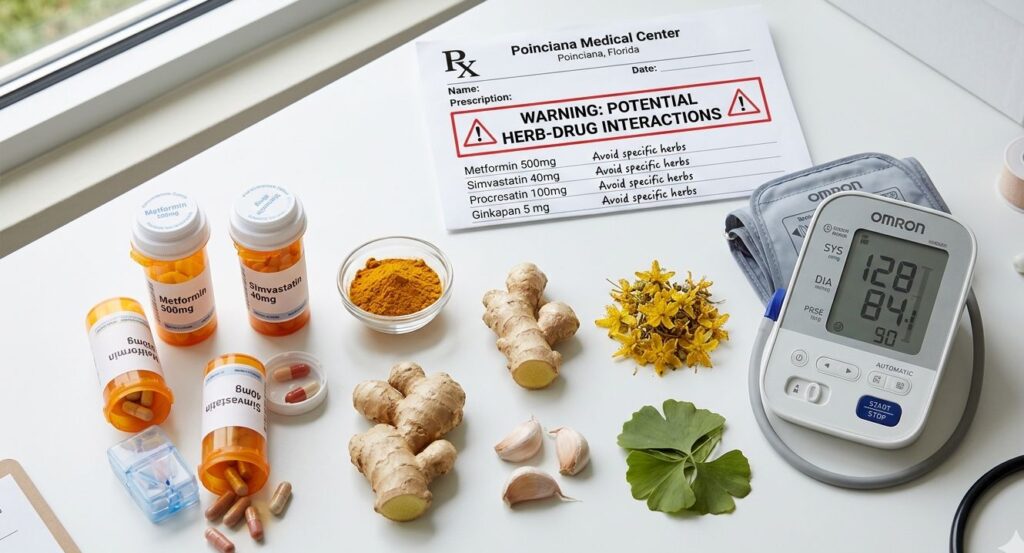
The intersection of herbs and pharmaceuticals is where most people make critical mistakes. While herbs are powerful healers, they’re also biochemically active — they interact with medications, can change how drugs are metabolized, and can amplify or reduce their effects.
Here’s what you absolutely need to know before mixing herbs and prescription drugs.
The Reality: Herbs Aren’t Separate from Pharmacology
Aspirin comes from willow bark. The heart medication digoxin comes from foxglove. Many pharmaceutical drugs are literally isolated from herbs.
This means herbs affect your body the same way drugs do — they’re just more complex (a plant contains hundreds of compounds, not one isolated molecule).
When you combine an herb with a drug, you’re creating a pharmacological interaction. Sometimes that’s fine. Sometimes it’s dangerous. Most of the time, people don’t know the difference.
Most Common Dangerous Interactions
St. John’s Wort + Antidepressants
The problem: Both increase serotonin. Combined = serotonin syndrome.
Symptoms: Agitation, confusion, rapid heartbeat, high blood pressure, tremors, fever.
Also conflicts with: Birth control pills, blood thinners, heart medications, cancer drugs
Why it happens: St. John’s Wort induces liver enzymes (CYP3A4), making many drugs metabolize too quickly, reducing their effectiveness.
Ginkgo Biloba + Blood Thinners
The problem: Ginkgo has mild blood-thinning effects. Combined with warfarin, aspirin, or other anticoagulants = bleeding risk.
Risk: Increased bleeding, easier bruising, GI bleeding, increased stroke risk (paradoxically).
Also conflicts with: NSAIDs, clopidogrel (Plavix), dabigatran (Pradaxa)
Turmeric/Curcumin + Blood Thinners
The problem: Curcumin may inhibit platelet aggregation. Combined with anticoagulants = excessive bleeding.
Risk: Nosebleeds, easy bruising, GI bleeding.
Safe combination: Curcumin in food amounts (curries) is fine. High-dose supplements are risky.
Licorice Root + Blood Pressure Medications
The problem: High doses of licorice cause sodium retention, raising blood pressure. This counteracts blood pressure drugs.
Risk: Elevated blood pressure, low potassium, fluid retention.
Also conflicts with: Diuretics, ACE inhibitors, beta-blockers
Safe use: Small amounts in food or tea okay. Avoid high-dose supplements.
Echinacea + Immunosuppressants
The problem: Echinacea stimulates immune system. Immunosuppressants suppress it. They work against each other.
Risk: Reduced transplant rejection protection, worsened autoimmune conditions.
Also conflicts with: Corticosteroids, TNF inhibitors, methotrexate
Milk Thistle + Medications Metabolized by Liver
The problem: Milk thistle may inhibit or induce liver enzymes, affecting drug metabolism.
Risk: Too much drug = toxicity. Too little drug = ineffectiveness.
Also conflicts with: Acetaminophen, statins, warfarin, chemotherapy drugs, many others
The liver processes ~70% of all medications. If you’re taking multiple drugs, liver enzyme interactions are serious.
Garlic Supplements + Blood Thinners
The problem: Garlic has mild anticoagulant effects. Combined with warfarin or other blood thinners = bleeding risk.
Risk: Nosebleeds, bruising, GI bleeding.
Safe use: Garlic in food is fine. High-dose supplements are risky.
Valerian + CNS Depressants
The problem: Both depress the central nervous system. Combined = excessive sedation.
Risk: Dangerous drowsiness, impaired cognition, respiratory depression.
Also conflicts with: Alcohol, benzodiazepines (Xanax, Valium), barbiturates, opioids
Ginger + Blood Thinners
The problem: Ginger may have mild anticoagulant effects. With blood thinners = bleeding risk.
Safe use: Ginger in food or tea (small amounts) is fine. High-dose supplements are risky.
Also conflicts with: NSAIDs, aspirin, warfarin
Why These Interactions Happen
Enzyme Induction
Some herbs turn on liver enzymes that metabolize drugs. Result: The drug breaks down too fast, loses effectiveness.
Herbs that induce:
- St. John’s Wort
- Ginseng
- Ginkgo (mild)
- Milk thistle
Affected drugs: Birth control, warfarin, many others
Enzyme Inhibition
Some herbs slow down liver enzymes. Result: Drugs build up in your body, causing toxicity.
Herbs that inhibit:
- Turmeric
- Milk thistle
- Grapefruit (not an herb, but same effect!)
- Some others
Affected drugs: Statins, digoxin, certain cancer drugs, many others
Additive Effects
Both the herb and drug do the same thing, so the combined effect is too strong.
Examples:
- Blood thinner + blood-thinning herb = too much bleeding
- Blood pressure drug + BP-lowering herb = dangerously low BP
- Sedative + sedating herb = excessive drowsiness
Competing Effects
The herb and drug work against each other.
Example:
- Immune stimulator + immunosuppressant = neither works well
Critical Drug-Herb Combinations to Avoid
| Drug Class | Avoid These Herbs | Why |
|---|---|---|
| Blood thinners (warfarin, apixaban, dabigatran) | Ginkgo, ginger, garlic, turmeric (high-dose), bromelain | Bleeding risk |
| Blood pressure meds | Licorice, hawthorn (extreme), ginseng | May lower BP too much |
| Antidepressants (SSRIs, SNRIs) | St. John’s Wort, SAMe | Serotonin syndrome risk |
| Birth control pills | St. John’s Wort, rifampin | Reduces pill effectiveness |
| Heart meds (digoxin) | Hawthorn, licorice, potassium-containing herbs | Toxicity/electrolyte imbalance |
| Diabetes meds | Fenugreek, chromium, alpha-lipoic acid | Hypoglycemia risk |
| Sedatives (benzodiazepines, sleeping pills) | Valerian, passionflower, kava, St. John’s Wort | Excessive sedation |
| Immunosuppressants (after transplant) | Echinacea, astragalus, reishi | Rejection risk |
| Cholesterol meds (statins) | Red yeast rice, niacin, milk thistle | Statin toxicity or reduced effect |
| NSAID pain meds | Ginger, turmeric, feverfew, white willow bark | GI bleeding/ulcer risk |
Safe Herb-Drug Practices
Rule #1: Tell Your Doctor Everything
- List every herbal supplement you’re taking
- Include vitamins, minerals, and “natural” products
- Mention it even if you think it’s harmless
- Update the list if you add or stop anything
Your pharmacist is also a good resource — they specifically track drug interactions.
Rule #2: Research Before Starting
For every herb you want to take:
- Identify what you’re taking it for
- Look up ALL medications you’re currently on
- Search “[herb name] interactions [drug name]”
- Ask your doctor before starting
Free resources:
- WebMD interaction checker
- MedlinePlus herb-drug interactions
- National Center for Complementary and Integrative Health (NCCIH)
- Your pharmacist
Rule #3: Start Low, Go Slow
Even with safe herbs:
- Start with lower doses
- Wait 1-2 weeks before increasing
- Monitor for side effects or changes in how your meds work
- Don’t add multiple herbs at once
Rule #4: Quality Matters
- Buy from reputable brands (NSF certified, USP verified)
- Avoid cheap supplements with inconsistent quality
- Look for standardized extracts with specific active compound percentages
- Store properly (cool, dark place)
Rule #5: Timing Matters
Some interactions are reduced by spacing out doses:
- Take blood thinners in morning
- Take St. John’s Wort in afternoon
- Ask your doctor/pharmacist about timing
Rule #6: Some Herbs Are Fine
These are generally safe with most medications (still check your specific ones):
- Chamomile (small amounts)
- Peppermint (food amounts)
- Lemon balm
- Ginger (food amounts)
- Turmeric (food amounts)
Key: Food amounts = safe. Supplement doses = check with doctor.
What Your Doctor Should Know
When you talk to your doctor about herbs:
Say: “I’m interested in adding [herb] to help with [symptom]. What are your thoughts on this, and are there any interactions with my current medications?”
Don’t say: “I’m just taking a natural supplement, it’s harmless.”
Good doctors want to know. They want to help you safely. The worst thing you can do is hide it and let an interaction happen.
The Reality Check
Most herb-drug interactions aren’t deadly, but:
- They can reduce medication effectiveness
- They can cause side effects
- They can worsen your condition
- They can create serious bleeding/toxicity in worst cases
The safest approach:
- Prevention first — Fix the problem with lifestyle, nutrition, stress management
- Pharmaceuticals second — When herbs won’t work alone
- Herb support — After talking to your doctor, in safe combinations
When Herbs Can Replace Meds (Safely)
With doctor supervision, some conditions can be managed with herbs instead of pharmaceuticals:
Mild anxiety: Ashwagandha, passionflower, lemon balm (instead of benzodiazepines)
Mild depression: St. John’s Wort (NOT if on SSRIs), omega-3s, B vitamins
Mild hypertension: Hawthorn, hibiscus, potassium-rich foods (instead of meds, if caught early)
Inflammation: Turmeric, boswellia, ginger (instead of NSAIDs, if mild)
High cholesterol: Red yeast rice, plant sterols, lifestyle changes (if mildly elevated)
Key: “Mild” and “with doctor supervision.” Don’t try to taper off serious medications on your own.
The Bottom Line
Herbs are powerful. That’s why they work. That’s also why they can interact dangerously with medications.
Before taking any herbal supplement:
- ✓ Tell your doctor
- ✓ Check interactions with your specific medications
- ✓ Start with food amounts first
- ✓ Use high-quality, standardized products
- ✓ Monitor how you feel
- ✓ Don’t self-taper prescription medications
Herbal medicine can be a wonderful addition to your healthcare toolkit. But treating it as “natural = automatically safe” is a mistake.
The safest healthcare integrates the best of both worlds: pharmaceutical precision where needed + herbal support where appropriate.
Disclaimer: This information is for educational purposes only. Always consult your healthcare provider and pharmacist before starting any herbal supplement, especially if you take medications. This is not medical advice.
