
Both ashwagandha and rhodiola are powerful adaptogens — herbs that help your body adapt to stress. But they work in different ways and shine in different situations. If you’re trying to decide between these two stress-fighting powerhouses, here’s what you need to know.
What Are Adaptogens?
Adaptogens are a unique class of herbs that help regulate your body’s stress response. Instead of sedating you like sleeping pills or stimulating you like caffeine, adaptogens work to bring your system back into balance — whether you’re overstimulated or exhausted.
Both ashwagandha and rhodiola fall into this category, but they each have distinct strengths.
Ashwagandha: The Calming Adaptogen
Best for: Anxiety, sleep issues, and chronic stress
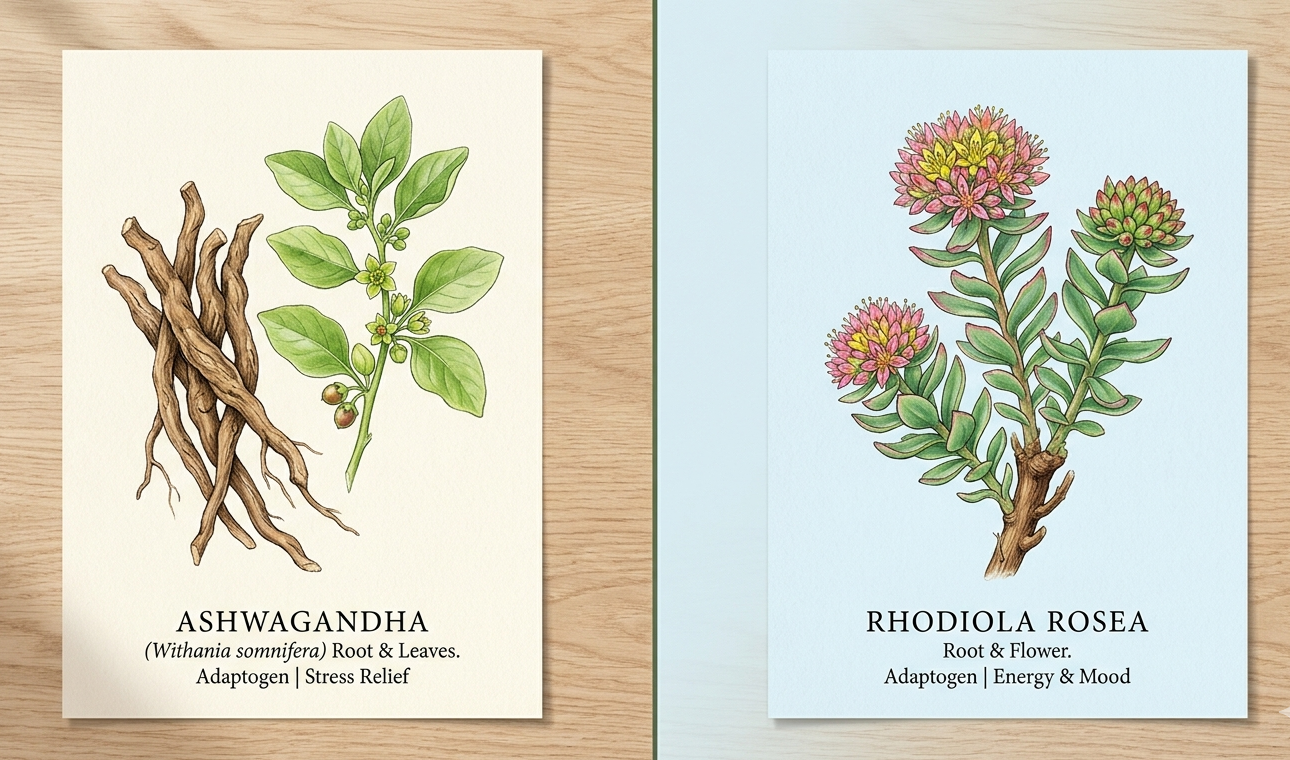
Ashwagandha (Withania somnifera) is one of the most researched adaptogens in the world. It’s particularly effective at lowering cortisol — your body’s main stress hormone.
What it does:
- Reduces anxiety and racing thoughts
- Improves sleep quality and helps you fall asleep faster
- Lowers cortisol levels (the “stress hormone”)
- Supports thyroid function
- Gentle energy boost without jitters
The feel: Calming and grounding. Most people describe ashwagandha as helping them feel “less wired.” It takes the edge off anxiety without making you drowsy.
Research strength: Ashwagandha has over 80 clinical trials supporting its use for stress and anxiety. It’s one of the most well-studied herbs in modern research.
When to take it: Evening or bedtime works well since it promotes relaxation. Some people take it in the morning if they’re dealing with chronic stress but not sleep issues.
Cautions: Avoid during pregnancy. May worsen hyperthyroidism or autoimmune conditions.
Learn more about Ashwagandha →
Rhodiola: The Energizing Adaptogen
Best for: Fatigue, mental fog, and physical performance
Rhodiola rosea is the go-to adaptogen when you’re burned out, exhausted, or need sustained energy without crashing. It’s particularly popular with athletes and high-performers.
What it does:
- Reduces mental and physical fatigue
- Improves focus and mental clarity
- Enhances athletic performance and endurance
- Lifts mood without being a stimulant
- Helps you power through demanding tasks
The feel: Energizing but smooth. Rhodiola gives you stamina and alertness without the jitters or crash of caffeine. It’s more about sustained performance than a quick boost.
Research strength: Rhodiola has good clinical evidence for reducing fatigue and improving cognitive function under stress. Studies show it works particularly well for “burnout” fatigue.
When to take it: Morning or early afternoon. Taking rhodiola late in the day may interfere with sleep for some people.
Cautions: Avoid if you have bipolar disorder. May cause restlessness in sensitive individuals.
Side-by-Side Comparison
| Factor | Ashwagandha | Rhodiola |
|---|---|---|
| Primary benefit | Calming, anxiety relief | Energy, mental clarity |
| Best for | Wired, anxious, can’t sleep | Tired, burned out, foggy |
| Effect on energy | Gentle, grounding | Noticeable boost |
| Effect on sleep | Improves sleep quality | May interfere if taken late |
| Best time to take | Evening or anytime | Morning/early afternoon |
| Research level | Excellent (80+ studies) | Good (40+ studies) |
| Onset of effects | 2-4 weeks for full effect | 1-2 weeks, some feel it sooner |
Which One Should You Choose?
Choose Ashwagandha if you:
- Feel anxious, worried, or “wired but tired”
- Have trouble falling asleep or staying asleep
- Need help lowering stress hormones
- Want a calming, grounding adaptogen
- Deal with chronic stress that manifests as tension
Choose Rhodiola if you:
- Feel exhausted, burned out, or mentally foggy
- Need sustained energy without caffeine jitters
- Want better focus and mental performance
- Are training physically and need stamina
- Deal with stress that manifests as fatigue
Can you take both?
Yes! Many people combine ashwagandha and rhodiola — taking rhodiola in the morning for energy and focus, then ashwagandha in the evening to wind down and sleep better. This “energize by day, calm by night” approach works well for people dealing with both fatigue and anxiety.
If you’re new to adaptogens, start with one for 2-3 weeks to see how your body responds before adding the second.
How to Take Them
Ashwagandha:
- Typical dose: 300-600mg of extract per day
- Traditional method: Root powder mixed in warm milk before bed
- Modern options: Capsules, gummies, tinctures
Rhodiola:
- Typical dose: 200-600mg of extract per day
- Best absorbed: On an empty stomach in the morning
- Available as: Capsules, tablets, tinctures
Both herbs work best when taken consistently for at least 2-4 weeks. They’re not “take as needed” herbs — adaptogens work by gradually retraining your stress response over time.
The Bottom Line
Both ashwagandha and rhodiola are powerful tools for managing stress, but they work in opposite directions. Ashwagandha calms you down and helps you rest. Rhodiola lifts you up and helps you perform.
The right choice depends on how stress shows up for you. If stress makes you anxious and sleepless, reach for ashwagandha. If stress leaves you exhausted and foggy, rhodiola is your herb.
And if you’re dealing with both? Consider using them together — rhodiola by day, ashwagandha by night.
Disclaimer: This information is for educational purposes only and is not medical advice. Always consult a qualified healthcare professional before starting any herbal supplement, especially if you are pregnant, nursing, taking medications, or have a medical condition.
Related herbs you might like:
- Ginseng → — Another energizing adaptogen
- Holy Basil → — Calming adaptogen from Ayurveda
- Lemon Balm → — Gentle anxiety relief
